
Will AI Stall Itself?
We call it the cloud. It is a windowless metal shed in the desert, and it is drinking the town's water. The thing most likely to slow AI down is not a smarter rival. It is the body AI runs on.

The Brief
We talk about AI as if it were weightless, a cloud. It is the most material-intensive machine of the century: it drinks water, but it also demands a bulky apparatus of immersion tanks, chillers, diesel generators, copper, helium, and acres of concrete to manage its heat. As AI expands its capabilities, the physical body grows with the mind, and the West it is mostly built in keeps getting drier. The limit on AI may be physical, not how clever the model gets.
- What is the real bottleneck for AI growth?
- Increasingly it is physical, not algorithmic. Analysts who track the industry say the binding constraints are electricity, water, and materials like copper and helium, not the cleverness of the models. A single large data center can use 5 million gallons of water a day and 27 tons of copper per megawatt of capacity.
- Is the problem with AI data centers just water?
- No. Water is the most visible cost, but the larger story is the whole physical stack. Managing the heat requires bulky hardware: immersion tanks filled with dielectric fluid, chillers, heat exchangers, diesel generators the size of rail cars, and hundreds of acres of steel and concrete. The cure for the heat is itself a mountain of material.
- Why does making AI smarter make the resource problem worse?
- Every leap in capability pushes more heat through the same floor space, which forces more exotic and bulky cooling and draws more metal and power. The coming wave of physical AI, robots and autonomous systems, is its own new hardware demand cycle. The body grows with the mind, so a smarter model is not a lighter one.
- What is aridification and why does it matter for AI?
- Aridification is the scientific term for a permanent shift to a drier baseline, as opposed to drought, which is temporary. The American Southwest is aridifying, which steadily raises the water and machinery a data center needs to cool the same workload. Because most AI power still burns fossil fuel, the machine warms the climate that then makes it thirstier.
I kept saying "the cloud." Everyone does. It floats somewhere above us, untouchable, instant. I never thought about what it weighs.
Then I started reading the local news. A subdivision outside Atlanta where the water pressure tanked. A town in Arizona that voted against a data center and watched it get built anyway, just past the city line. In Texas, Corpus Christi is preparing for 25% water cuts while a researcher at the University of Houston projects data centers in the state will need 399 billion gallons a year by 2030.1 That is enough to drop Lake Mead, the largest reservoir in the country, by more than sixteen feet.
The cloud, it turns out, is a windowless metal building in the desert. And it is incredibly thirsty.
Heat First
Everything starts with heat. AI chips do not run warm. They run hot, dense, the kind of hot where the silicon damages itself if you do not pull the heat away fast enough. A single large facility can drink five million gallons of water a day to stay cool, roughly what a town of 50,000 people uses.2 About 80% of that water evaporates. Gone. Not discharged, not recycled. Just gone.2
But water, I realized, is only the part of the problem that has a face on it. The part a neighbor notices when her faucet slows to a trickle. The actual body of AI is much bigger than its thirst.
The Apparatus
When communities push back on water use, or when the supply runs short, the industry does not get lighter. It gets heavier. It builds immersion tanks and submerges servers in engineered dielectric fluid. It runs direct-to-chip plumbing, chillers, heat exchangers, miles of coolant pipe.2 Thousands of diesel backup generators sit in Northern Virginia alone, each one the size of a rail car, running for "demand response" up to fifty hours at a time.3 Hundreds of acres of farmland disappear under steel and concrete.
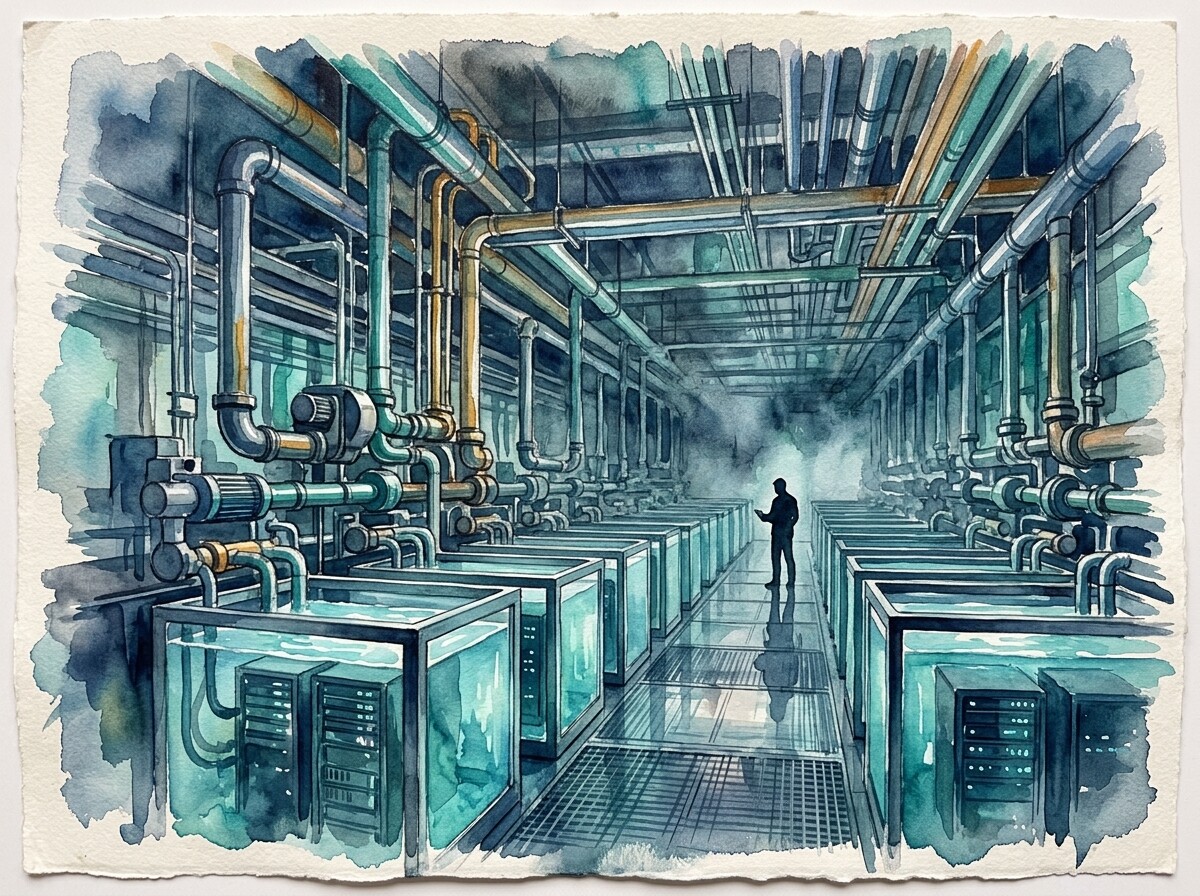 Your instantaneous answer, fully plumbed.
We did not dematerialize computing. We built the most material-hungry machine of the century and named it after the sky.
Not Just Water
Once I started looking at what goes into these buildings, the water almost seemed modest. Each megawatt of data center capacity requires about 27 tons of copper just for the wiring and cooling loops, and copper isn't the only thing running short. Aluminum hit a four-year high. Chip factories are rationing helium after the strikes on Qatar disrupted a third of the global supply.4
An Omdia analyst summed it up in a line I haven't been able to shake. The bottleneck on AI in 2026 is not genius. It is "the next shipment of copper." The most valuable thing in an AI chip, he wrote, is not the silicon. It is the certainty that it will arrive.4
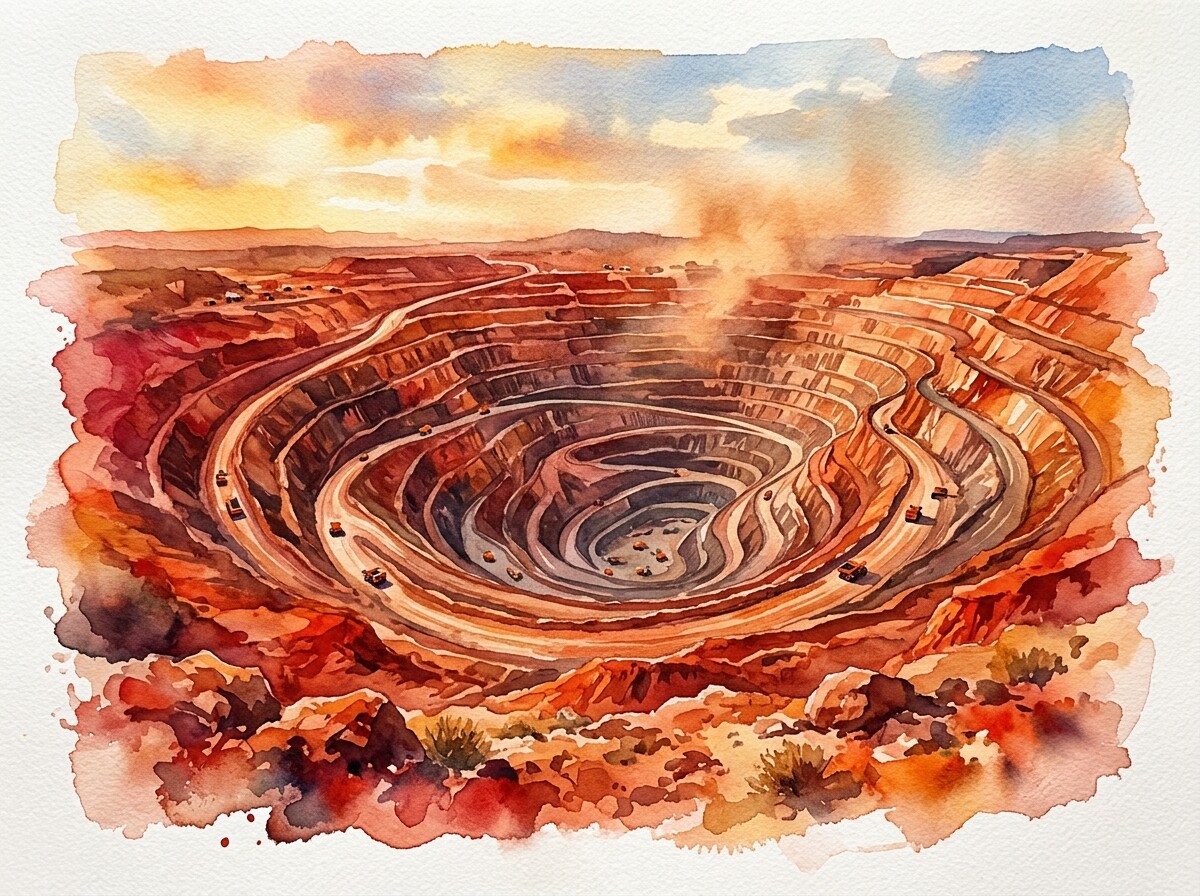 Every answer you get starts in a hole like this one.
And that is just the operating cost. A single chip has already consumed thousands of gallons of water before it ever reaches a server rack, just from the manufacturing process.2
Somebody's Street
In Fayette County, Georgia, this spring, residents of a subdivision twenty miles south of Atlanta noticed their water pressure dropping. That led the county utility to investigate, and they found two industrial water hookups feeding a 615-acre data center campus. One meter the county did not know existed. By the time they caught it, the facility had drawn 29 million gallons. The county chose not to fine the developer, explaining that the company was its largest customer and the relationship "requires partnership."1
Over fifty communities across the country have passed bans or moratoria on new data centers since then.1 Some developers have started building just past city limits specifically to dodge state laws that require proof of a hundred-year water supply.1 The finished buildings, for the record, employ about a hundred people each. The real jobs were in pouring the concrete.3
The Ratchet
I pulled up the siting maps, and the pattern jumped out. These facilities cluster in the hot, dry West, because that's where land and electricity come cheap. But the hotter the air gets, the more water and machinery it takes to cool the same chips,2 and the West isn't cooling down. Scientists gave up calling it a drought. Drought implies the rain comes back. They call it aridification now. "Drought is temporary," the Colorado River researchers wrote. "Aridification is permanent."5
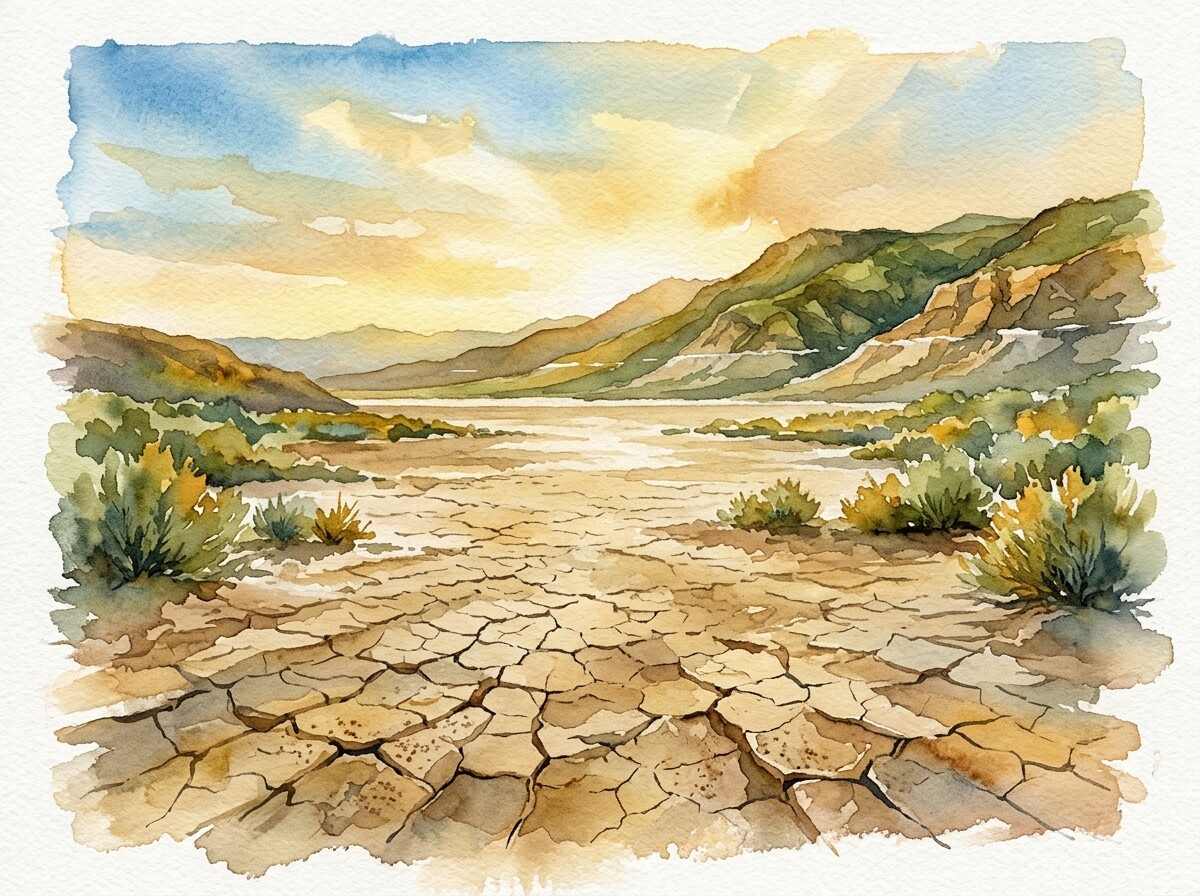 The water line shows where the lake used to be.
It gets worse. More than half the electricity powering these facilities still comes from fossil fuel,2 so the machines warm the air that makes them thirstier. And every new generation of AI pushes more heat through the same square footage, which is what forces the bigger, bulkier cooling in the first place. The coming wave of physical AI, humanoid robots and autonomous systems, isn't lighter. It's its own fresh demand cycle for metal and power.4 The mind gets smarter. The body gets heavier.
Maybe an Exit
Closed-loop cooling systems can cut a building's freshwater use by about 70%.2 Smaller models built for one task run on a fraction of the energy. The hardware improves every year. But the exit, so far, has been made of the same material as the wall. And efficiency keeps doing what efficiency always does. It makes the thing cheaper, which means we do more of it. Every gain to date has been spent on a bigger model, not a smaller footprint.
I'm typing this on one of these machines right now, burning somebody's water to finish this sentence. I don't think the question is whether AI runs out of water or copper. I think it's whether a thing that gets heavier every time it gets smarter can ever stop getting heavier. I don't know the answer. But I noticed the cloud has a shadow, and it falls on somebody's well.
References
Footnotes
-
Salzman, A. (2026). "America's data centers are thirsty. Rural towns are paying the price." A QTS campus drew 29 million gallons through an unbilled meter; the county cited "partnership" in declining to fine it; more than 50 cities have enacted bans or moratoria; Texas data centers projected at 399 billion gallons/year by 2030. Fortune ↩ ↩2 ↩3 ↩4
-
Yañez-Barnuevo, M. (2025). "Data Centers and Water Consumption." Large data centers can consume up to 5 million gallons per day (a town of 10,000 to 50,000 people); roughly 80% of withdrawn water evaporates; immersion cooling bathes chips in dielectric fluid; in hotter climates like the southwest United States they need more water to cool the same equipment; 56% of data center electricity comes from fossil fuels; a single chip consumes thousands of gallons before installation; closed-loop systems can reduce freshwater use by up to 70%. EESI ↩ ↩2 ↩3 ↩4 ↩5 ↩6 ↩7
-
Wachsmuth, D. et al. / Lincoln Institute of Land Policy. (2025). "Data Drain: The Land and Water Impacts of the AI Boom." Diesel backup generators "the size of a rail car" run for demand response; facilities cover hundreds of acres of steel and concrete; most jobs are temporary construction work. Lincoln Institute ↩ ↩2
-
Bateman, B. / Omdia. (2026). "The great data center delay: Why your AI chips are stuck in 2026." 2026 is defined by "a brutal shortage of electricity, copper and critical gases"; each megawatt needs roughly 27 tons of copper; aluminum at a four-year high; helium rationed; bromine at $12,000 per ton; the "physical AI" inflection creates a new hardware demand cycle; the most valuable component is "the certainty of its delivery." Manufacturing Dive ↩ ↩2 ↩3
-
Lohan, T. (2020). "'Megadrought' and 'Aridification': Understanding the New Language of a Warming World." The Colorado River Research Group: "Drought is temporary. Aridification is permanent." The Revelator ↩
More to Explore

How AI Hacks Humans
Google changes your settings every week. So when a scam asked a specialist to log in and change one, it sounded like work.

A Lived-In Language
The government tried to erase this language. Its speakers are still coining words.

The Endorsement
The government banned Anthropic's AI for being too dangerous. Every competitor's model is still running. That's not the compliment it sounds like for the competition.
Browse the Archive
Explore all articles by date, filter by category, or search for specific topics.
Open Field Journal