
The Broken Rung
IBM said AI would replace 7,800 jobs. Three years later, they're tripling entry-level hiring. The story in between is the one nobody planned for.

The Brief
Companies that cut entry-level talent to save costs with AI are now reversing course after discovering they broke the apprenticeship pipeline. IBM went from promising to replace 7,800 jobs to tripling entry-level hiring. The article covers Gartner's 'Experience Starvation' finding and Stanford-Harvard research showing AI cannot substitute for foundational expertise.
- Why is IBM tripling entry-level hiring after saying AI would replace jobs?
- IBM discovered that eliminating junior roles created a pipeline crisis. Companies that cut entry-level talent ended up poaching mid-level employees at 30 percent premiums, and outside hires took longer to adapt. IBM's CHRO said companies that double down on entry-level hiring now will be the most successful in three to five years.
- What is Experience Starvation in AI adoption?
- Experience Starvation is Gartner's term for what happens when senior staff use AI instead of mentoring junior colleagues. The apprenticeship model that builds future leaders collapses. SignalFire data shows new graduates now make up just 7 percent of Big Tech hires, down from 25 percent in 2023.
- What is the AI wall effect?
- Stanford and Harvard researchers found that AI tools help workers with adjacent knowledge nearly match experts, but workers from unrelated disciplines show zero improvement. They called this limit 'the AI wall,' meaning AI cannot substitute for foundational expertise that employees need to evaluate and improve AI output.
- Did companies that replaced workers with AI reverse their decisions?
- An Orgvue survey of over 1,000 business leaders found 55 percent of employers who laid off staff due to AI now admit they made the wrong call. Klarna cut 700 customer service positions, watched quality decline, and began rehiring. Forrester predicts half of AI-attributed layoffs will be quietly reversed by end of 2026.
Think about any skill you're good at. Really good at. Now think about how you got there. Somebody showed you. Maybe they didn't call it mentorship. Maybe it was just the senior developer who sat with you the first time the build broke, or the manager who let you shadow a client call before you ran one yourself. There was a rung on the ladder, and somebody held it steady while you climbed.
A lot of companies just removed that rung.
IBM's CEO told Bloomberg that AI would replace roughly 7,800 back-office jobs.1 Senior engineers started pairing with AI instead of delegating to juniors. It was faster. It was cheaper. Klarna replaced 700 customer service reps with an OpenAI-powered assistant.2 The math worked for about eighteen months. Then Klarna started rehiring. "We focused too much on efficiency and cost," their CEO told Bloomberg. "The result was lower quality."2
 The org chart still had the roles. The desks just stayed empty.
Fifty-five percent of employers who cut staff because of AI now say they made the wrong call.2 The CEO of AWS called replacing junior workers with AI "one of the dumbest things I've ever heard."2 AWS. The company selling the AI infrastructure.
Gartner has a name for what happened next: "Experience Starvation." When it's faster to ask an AI than to walk a junior colleague through a problem, senior staff stop teaching. Not because they don't care. Because nobody's asking them to. New graduates now make up 7 percent of new hires at Big Tech. In 2023, that was 25 percent.2
Dropbox's chief people officer compared Gen Z's AI skills to biking in the Tour de France while the rest of us are on training wheels.1 Companies cut the generation most fluent in the tool they bet the company on.
But here's what really worries me. Expertise ages out. The senior engineers who still know the systems, who can spot when AI output is wrong, who carry decades of context in their heads? They're going to retire. And if nobody came up behind them, that knowledge doesn't get archived somewhere. It just leaves.
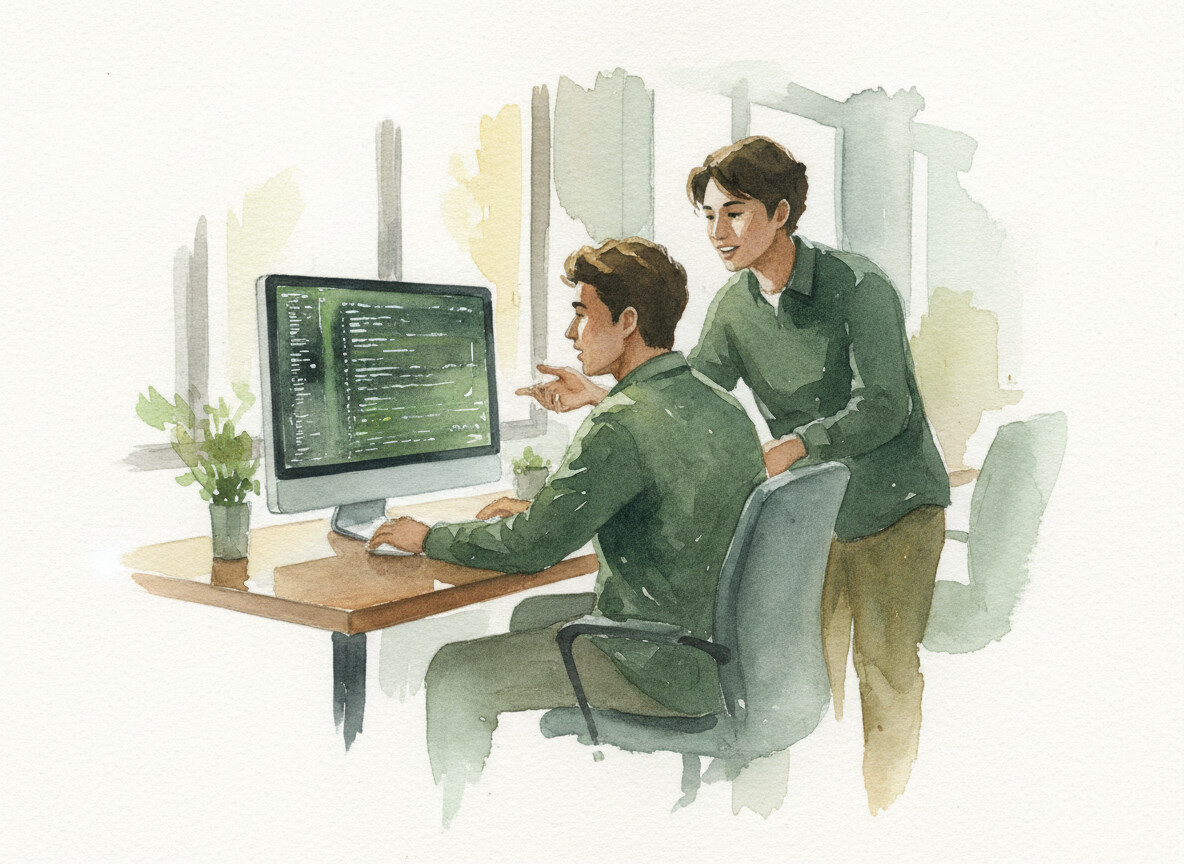 The job changed. The humans stayed.
A Stanford and Harvard study showed why this matters so much.3 They gave employees AI tools and tracked who got better. People with adjacent knowledge nearly matched the experts. But people from completely different disciplines? Nothing. Zero improvement. The researchers called it "the AI wall." If you don't know enough to judge what the AI is giving you, it can't help you.
That's the trap. The expertise that junior roles build is the same expertise you need to use AI well. Remove the rung, and nobody learns to climb.
IBM figured this out. They're tripling entry-level hiring now, but they rewrote the jobs first.1 Junior developers do client work and AI correction instead of routine coding. Cloudflare is bringing on 1,111 interns. Cognizant's CEO called AI "an amplifier of human potential, not a displacement strategy."2
The companies getting this right aren't the ones who adopted AI fastest. They're the ones who noticed what broke when they skipped a step.
References
Footnotes
-
LaMoreaux, N., quoted in Fortune (2026). "IBM is tripling the number of Gen Z entry-level jobs after finding the limits of AI adoption." Fortune ↩ ↩2 ↩3
-
Toscano, J. (2026). "Corporate America Is Rethinking AI Workforce Needs, Led By IBM." Forbes ↩ ↩2 ↩3 ↩4 ↩5 ↩6
-
Vendraminelli, L. et al. (2025). "The GenAI Wall Effect." Reported in Harvard Business Review (2026). HBR ↩
More to Explore

How AI Hacks Humans
Google changes your settings every week. So when a scam asked a specialist to log in and change one, it sounded like work.

A Lived-In Language
The government tried to erase this language. Its speakers are still coining words.

The Endorsement
The government banned Anthropic's AI for being too dangerous. Every competitor's model is still running. That's not the compliment it sounds like for the competition.
Browse the Archive
Explore all articles by date, filter by category, or search for specific topics.
Open Field Journal