
The Second Audience
What happens when half the visitors to your website can't see it?

The Brief
This article examines how Google's Universal Commerce Protocol and the rise of AI shopping agents are creating a dual-audience reality for websites. It explains why automated traffic now exceeds human traffic and what businesses should understand about serving both human visitors and AI agents.
- What is the Universal Commerce Protocol (UCP)?
- UCP is an open-source protocol developed by Google with partners including Shopify, Etsy, and Wayfair. It standardizes how AI agents interact with online stores, letting them browse inventory, check prices, and complete purchases inside a conversation without the shopper visiting the retailer's website.
- What is Agent Experience (AX)?
- Agent Experience is a concept describing how easily AI agents can discover, evaluate, and transact with a business. Coined by Joe Toscano in Forbes, it's the AI-facing counterpart to user experience (UX), focused on structured data and machine-readable information rather than visual design.
- What percentage of web traffic is now automated?
- According to WP Engine's analysis of the Imperva Bad Bot Report, automated traffic accounts for 51% of all web activity, surpassing human traffic for the first time in a decade. Most businesses haven't adapted their websites to serve this non-human audience.
- How much commerce will AI agents handle by 2030?
- McKinsey estimates AI agents could mediate three to five trillion dollars in global consumer commerce by 2030. This includes transactions where agents handle product discovery, price comparison, and purchasing on behalf of human shoppers.
I was watching a panel the other week. Peter Diamandis, Alexander Wissner-Gross, a handful of researchers swinging between "this changes everything" and "we're all doomed." The topic was Google's new Universal Commerce Protocol, and the consensus seemed to be forming around extinction. The web as we know it, finished.
Then Wissner-Gross said something that stopped the pendulum.
"This is not the end times," he said. "It is a way to start to standardize e-commerce from within Gemini and other chat agents. That's all it is."1
Those four words stuck with me. Not because they're dismissive, but because they're the most honest thing I've heard anyone say about what's happening to the web this year.
The Protocol
This week, Google made items from Etsy and Wayfair purchasable without anyone visiting either site.2 The mechanism is UCP, an open-source protocol that lets AI agents browse a store's inventory, check prices, and complete a purchase inside a conversation. Shopify, Target, and Walmart are next.
If you've been tracking the "death of the website" headlines, this feels like confirmation. Why visit a store when the agent already handled it?
But Wissner-Gross is right. This isn't an ending. It's a standardization.
The Second Audience
Automated traffic now accounts for 51% of all web activity.3 Your website already has more non-human visitors than human ones. Most businesses haven't noticed because everything about their site still faces one direction: toward a person with a screen and a scroll wheel.
Joe Toscano, writing in Forbes, has a name for the other direction: "Agent Experience," or AX.4 Think of it as UX for algorithms. Your site was built for people who browse, feel your brand, respond to your photography and layout. Now a second audience shows up that ignores all of that. It reads what's structured. Specifications, inventory, pricing. Clean answers it can hand back to whoever sent it.
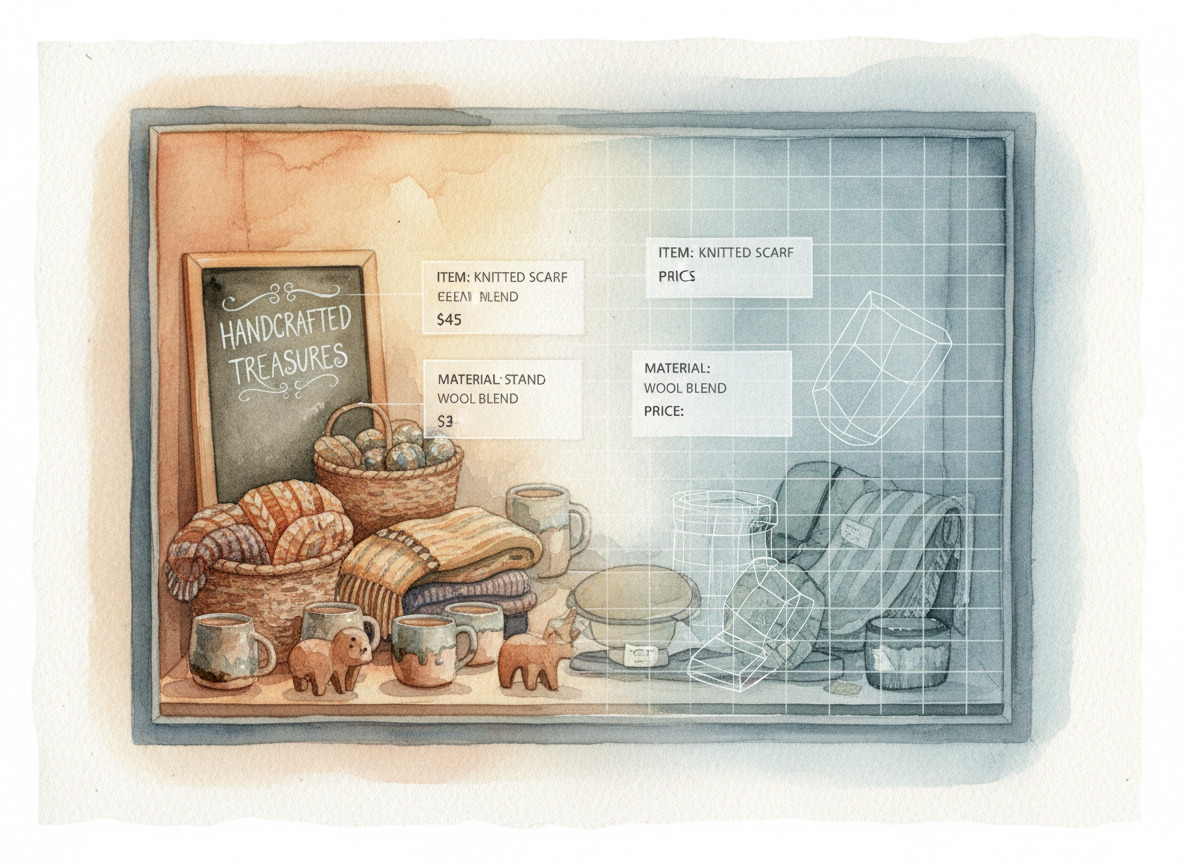 Same storefront. Two very different visitors.
The two audiences don't compete. Humans want warmth and story. Agents want parseable data. They just read differently.
Translation, Not Extinction
McKinsey estimates that AI agents could mediate $3 to $5 trillion in global commerce by 2030.5 That's not a number you wave away. But people still browse, still window-shop, still buy things because the packaging caught their eye or the display made them pause. Agents won't replace that. They'll handle the transactions people would rather skip: reorders, price comparisons, the "find me the same thing but cheaper" errands.
 Learning the second language.
The businesses figuring this out aren't rebuilding from scratch. They're adding a second language to the site they already have. The human side stays warm. The agent side stays structured. Same address, two conversations happening at once.
Wissner-Gross said it well. Not the end times. A standardization. Your website isn't dying. It just learned it has a second audience, and that audience reads with different eyes.
References
Footnotes
-
Diamandis, P. & Wissner-Gross, A. (2026). "Abundance Summit Panel Discussion." YouTube ↩
-
Srinivasan, V. (2026). "What to expect in digital advertising and commerce in 2026." Google Blog ↩
-
WP Engine. (2026). "The Shape of the Web in 2026." WP Engine Blog ↩
-
Toscano, J. (2026). "In The B2AI Era Agent Experience Is Rewriting The Marketing Playbook." Forbes ↩
-
Mahajan, D., Mayer, H., Schumacher, K., & Roberts, R. (2026). "The automation curve in agentic commerce." McKinsey ↩
More to Explore

How AI Hacks Humans
Google changes your settings every week. So when a scam asked a specialist to log in and change one, it sounded like work.

A Lived-In Language
The government tried to erase this language. Its speakers are still coining words.

The Endorsement
The government banned Anthropic's AI for being too dangerous. Every competitor's model is still running. That's not the compliment it sounds like for the competition.
Browse the Archive
Explore all articles by date, filter by category, or search for specific topics.
Open Field Journal